


Pre 1600's
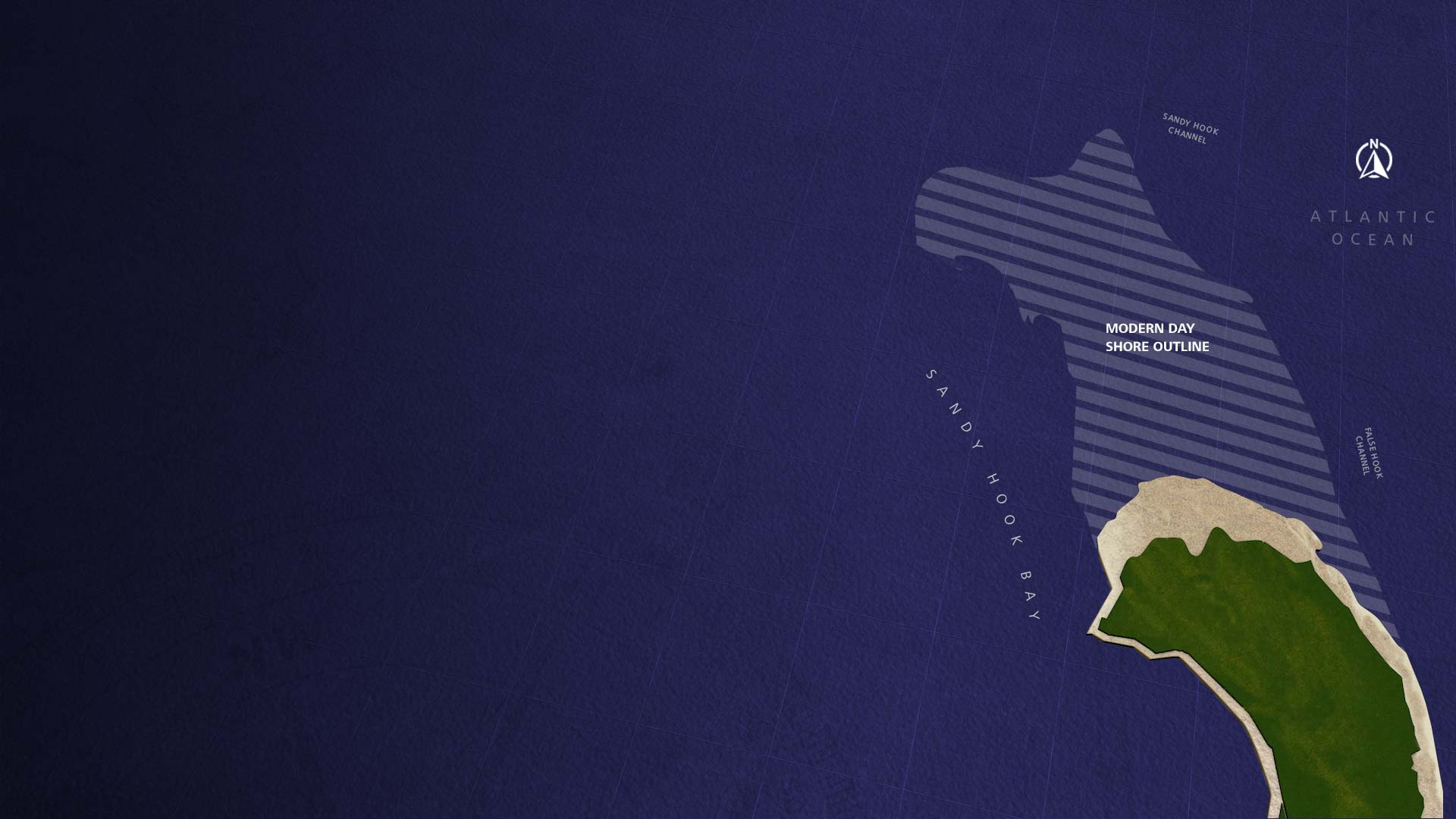
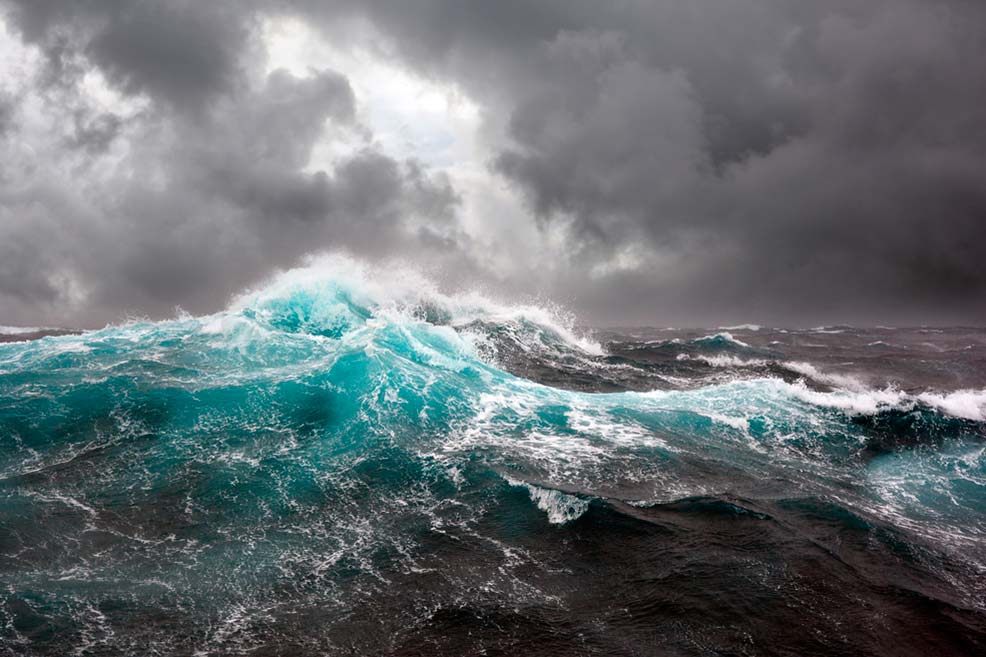
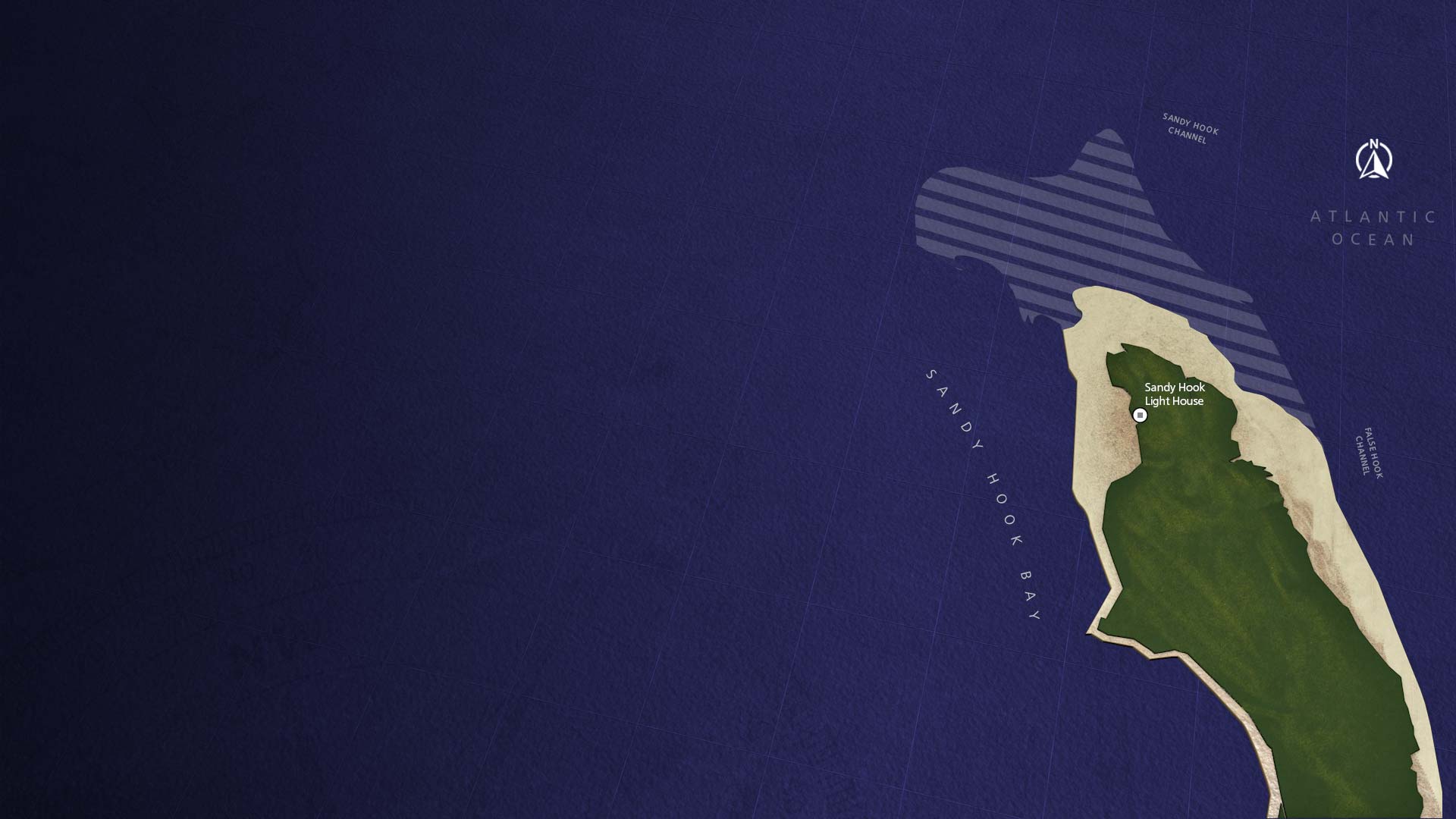
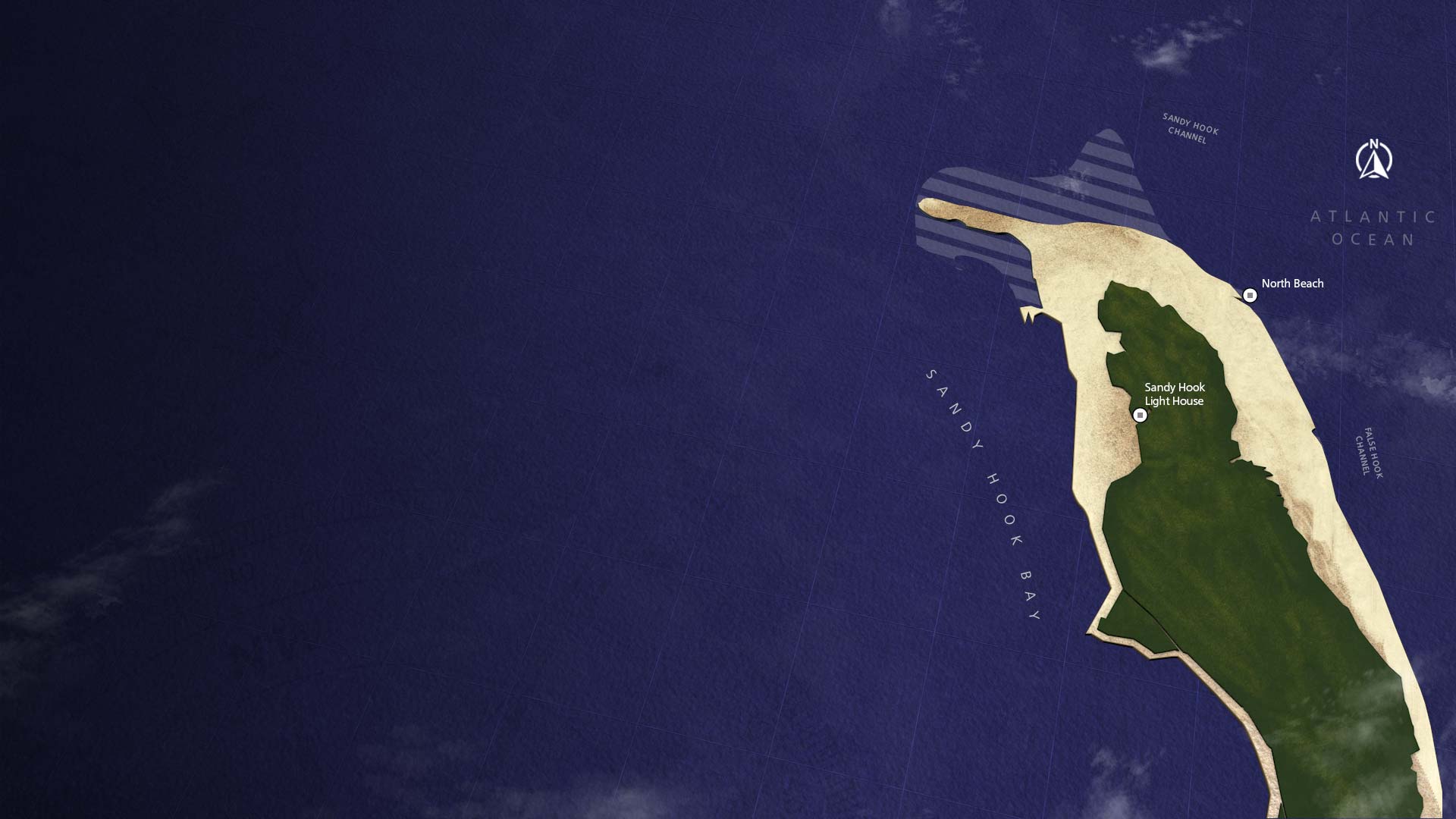
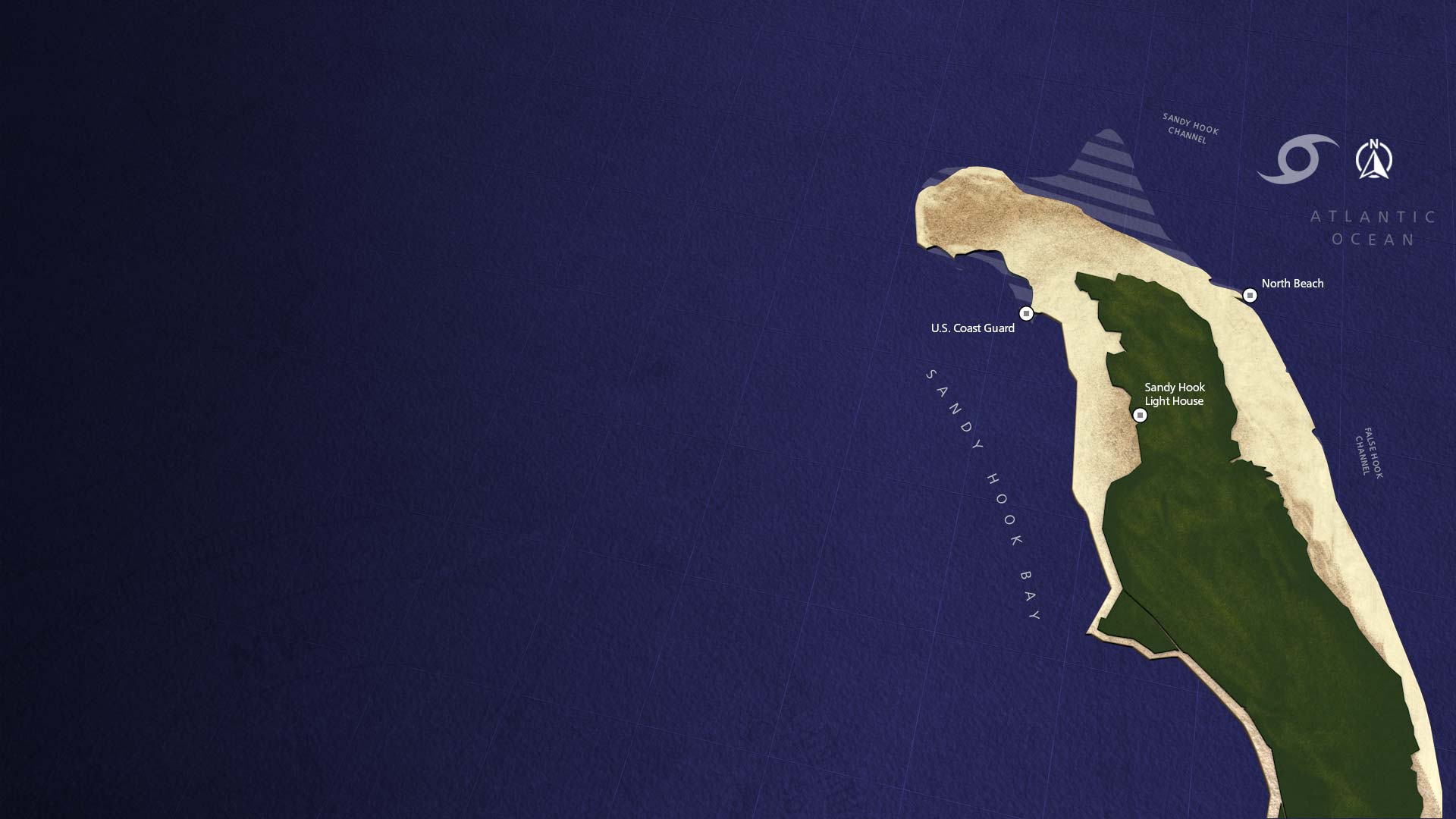
Ever since there were storms, the littoral drift or movement of sand northward has changed the shape of Sandy Hook's peninsula. This natural process along the shoreline is called coastal geomorphology.
1609
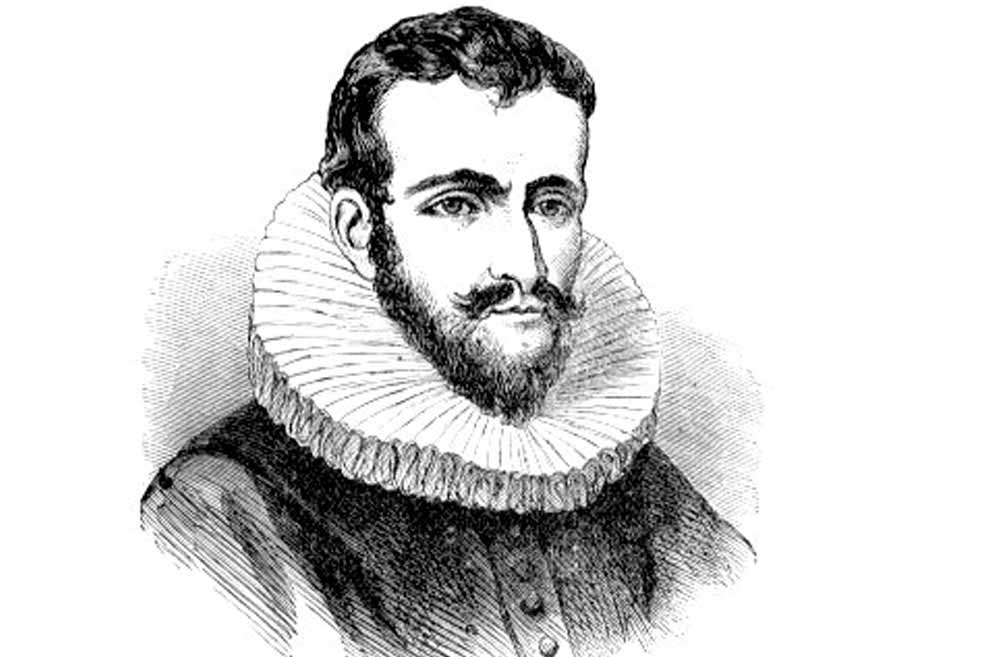
Sea captain Henry Hudson sailed around Sandy Hook in the early 1600's. Over several millennia the longshore current and littoral drift created Sandy Hook, which probably began as a small sand shoal extending from the Long Branch, New Jersey, area 6 miles to the south.
1764
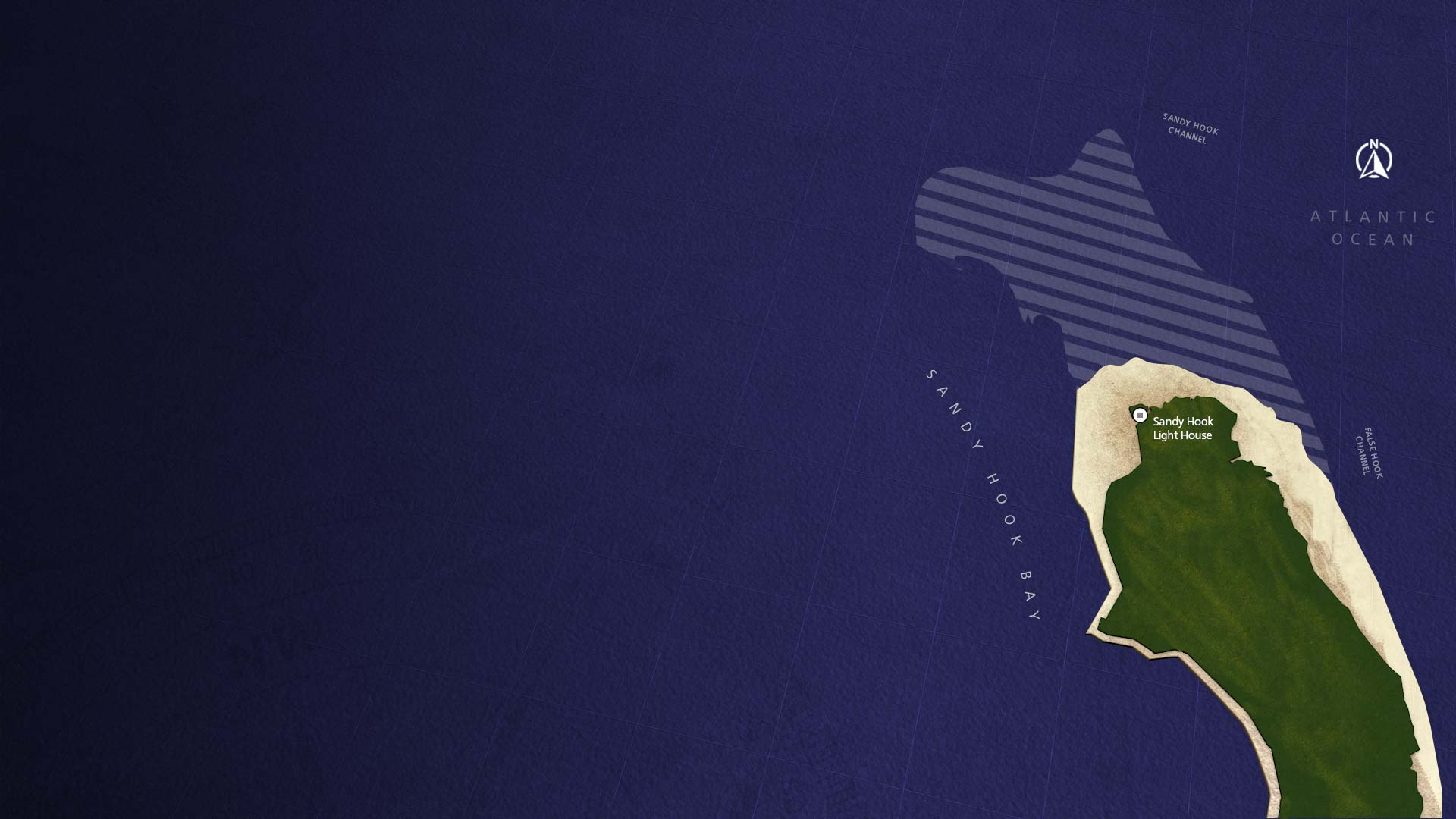
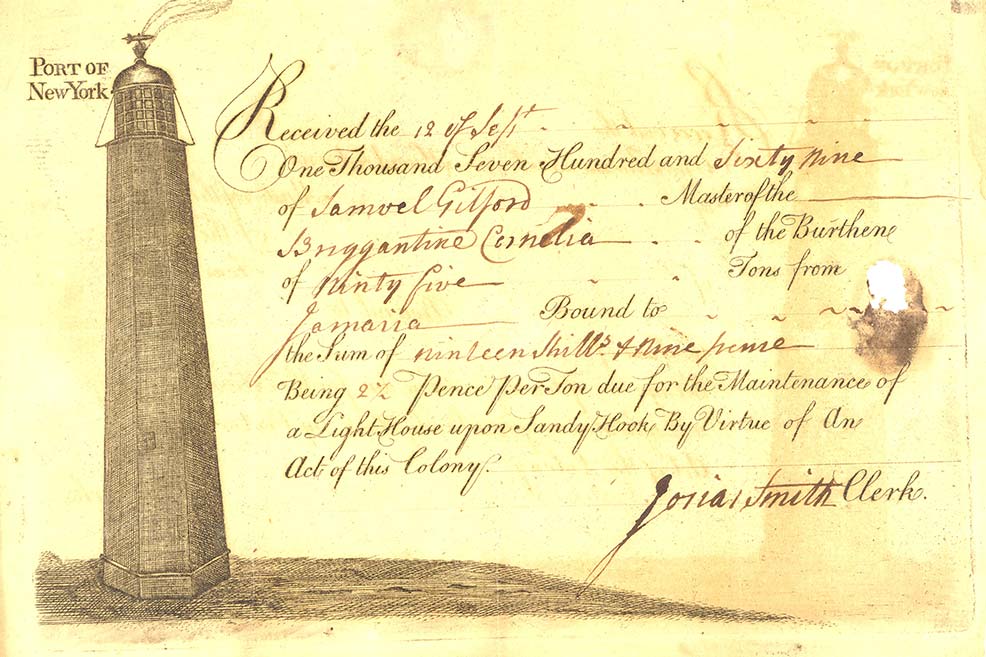
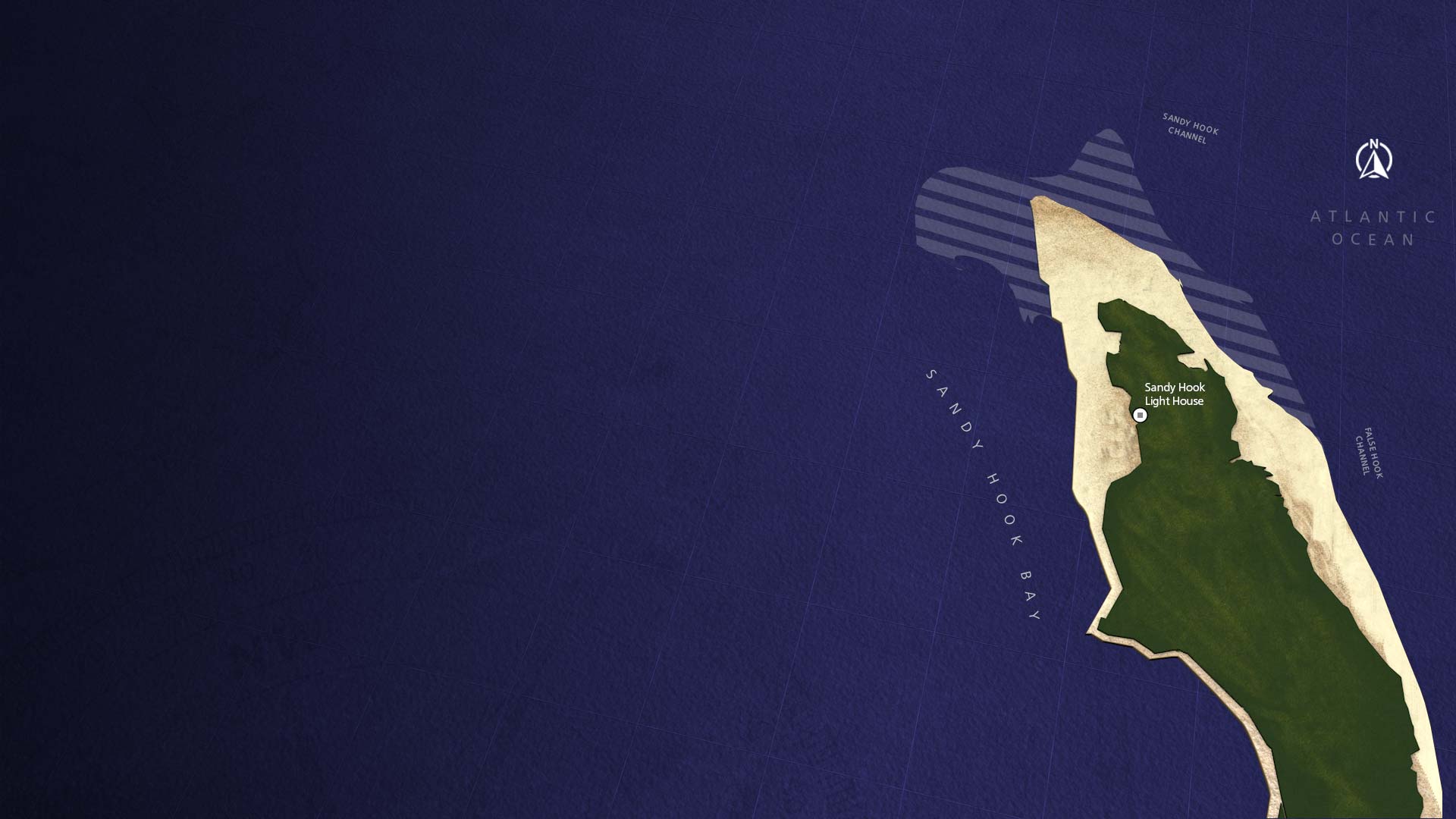
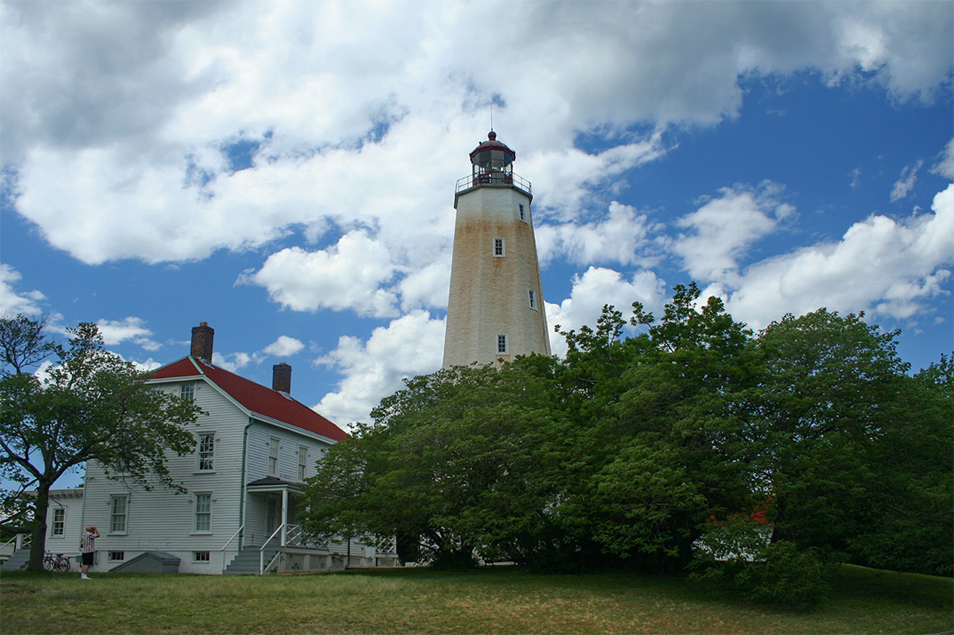
When completed in 1764, the Sandy Hook Lighthouse stood just 500 feet from the tip of the Hook. This Port of New York tonnage tax receipt, dated 1769, is the earliest known engraving of the Sandy Hook Lighthouse. Littoral drift added more sand since 1764 and today the lighthouse is a mile and a half from the tip.
1776
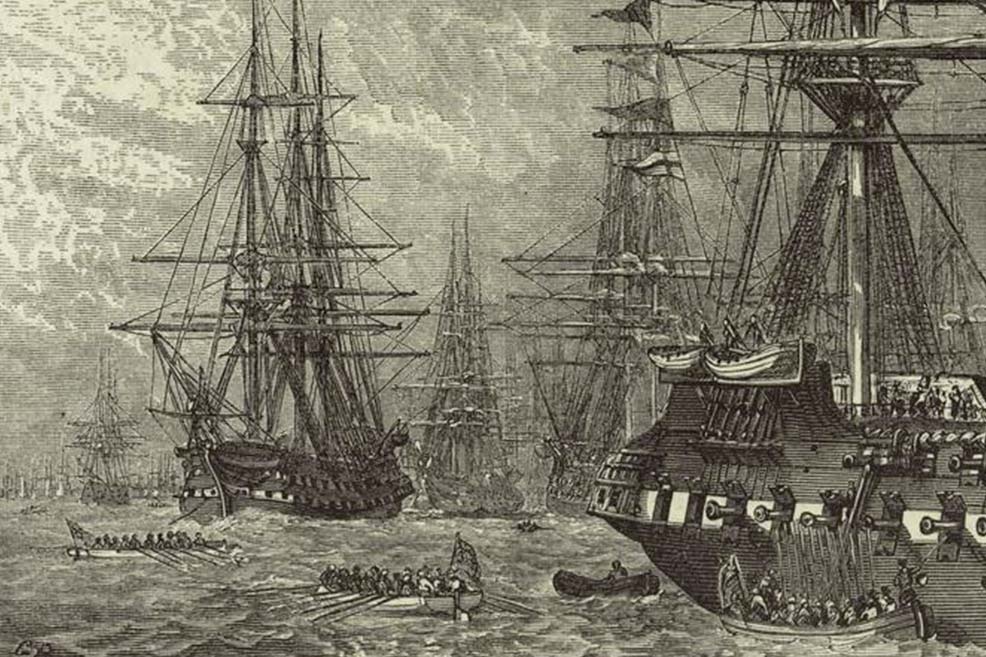
In June 1776, the British easily captured Sandy Hook because General George Washington's newly created Continental Army lacked the manpower and resources to fortify and defend strategic harbor points like Sandy Hook.
Photo: The British Fleet in the Lower Bay
1821
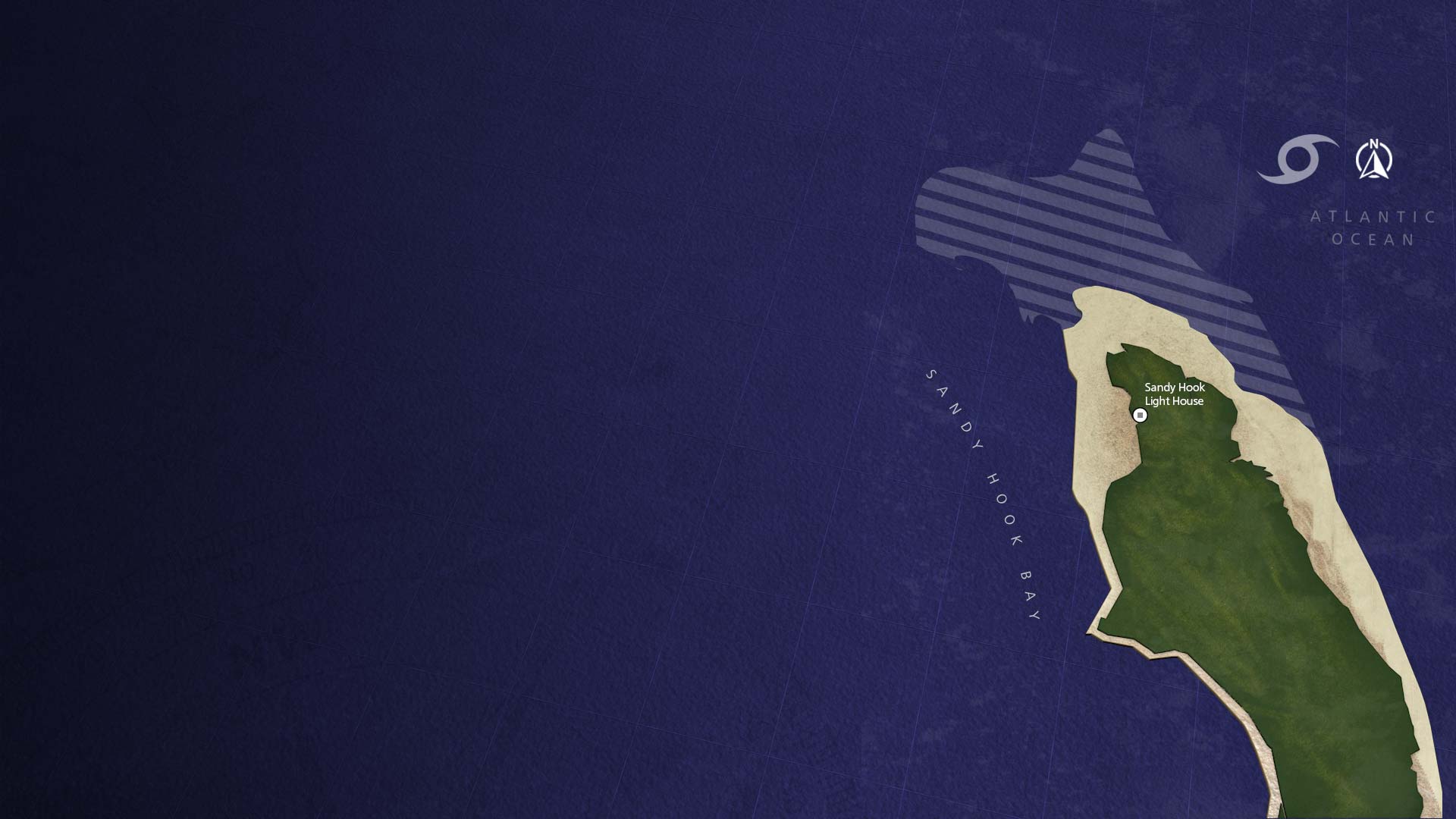
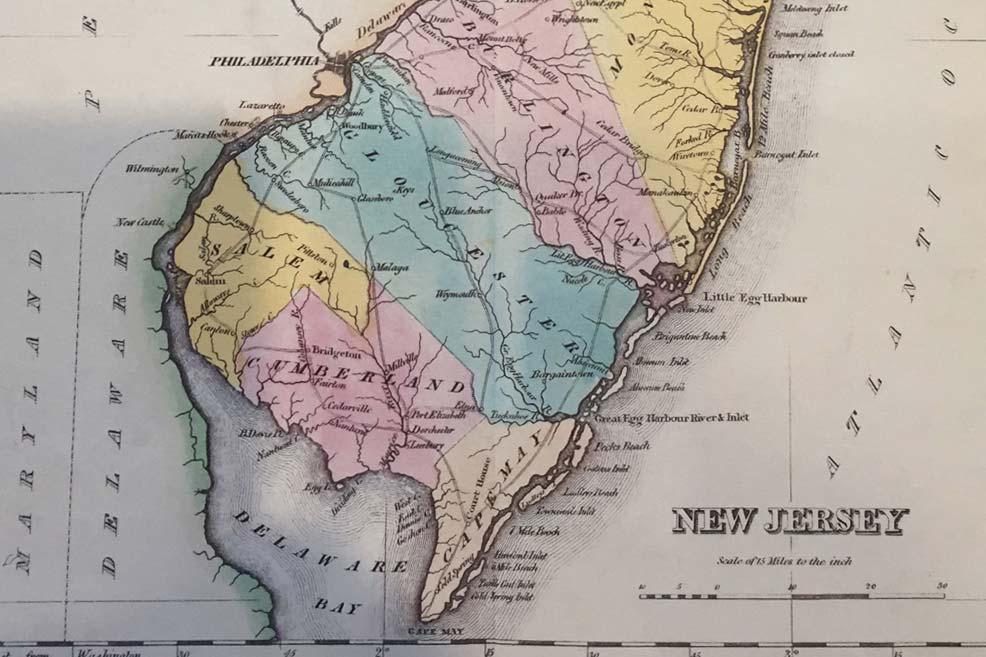
Hurricane of 1821
A storm that hit New Jersey in September 1821 is also known as the Cape May Hurricane.
The eye passed over Cape Henlopen Delaware, just south of Cape May, before moving at 50
mph through the state on a path that generally follows where the Garden State Parkway
is now located.
1871
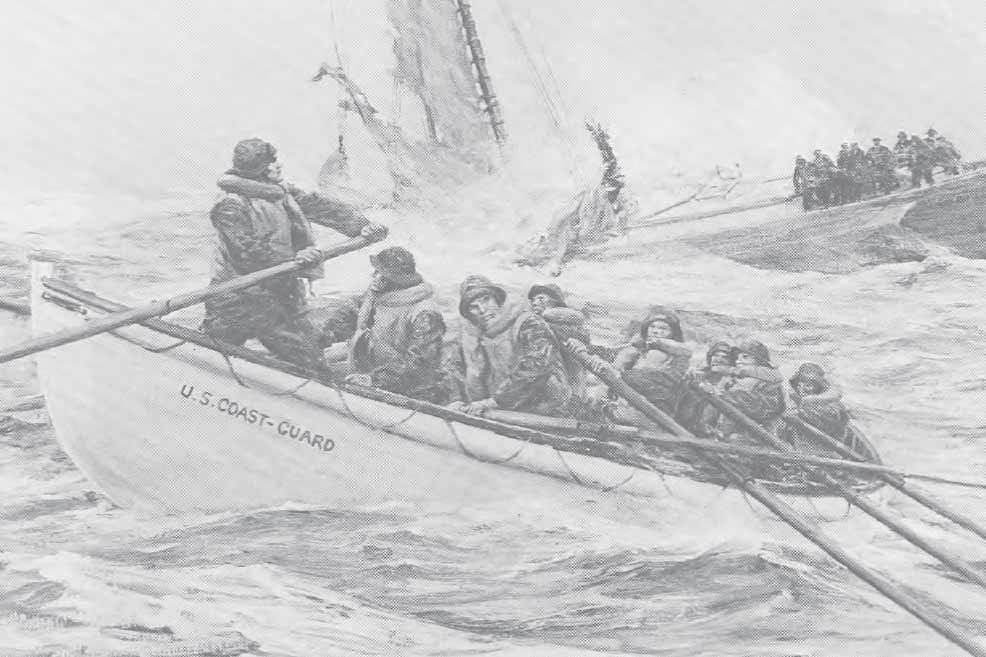
From 1871 through 1914, the United States Life Saving Service (USLSS) aided 28,121 vessels and rescued or aided 178,741 persons, with only 1,455 people losing their lives. But as iron-hulled steamships replaced sail-powered wooden vessels, the need for a life-saving service changed as well. In 1915 the USLSS was merged with The Revenue Marine Service to form the U.S. Coast Guard, which continues its presence at the tip of Sandy Hook and maintains the light in the Sandy Hook Lighthouse.
1897 - 1899
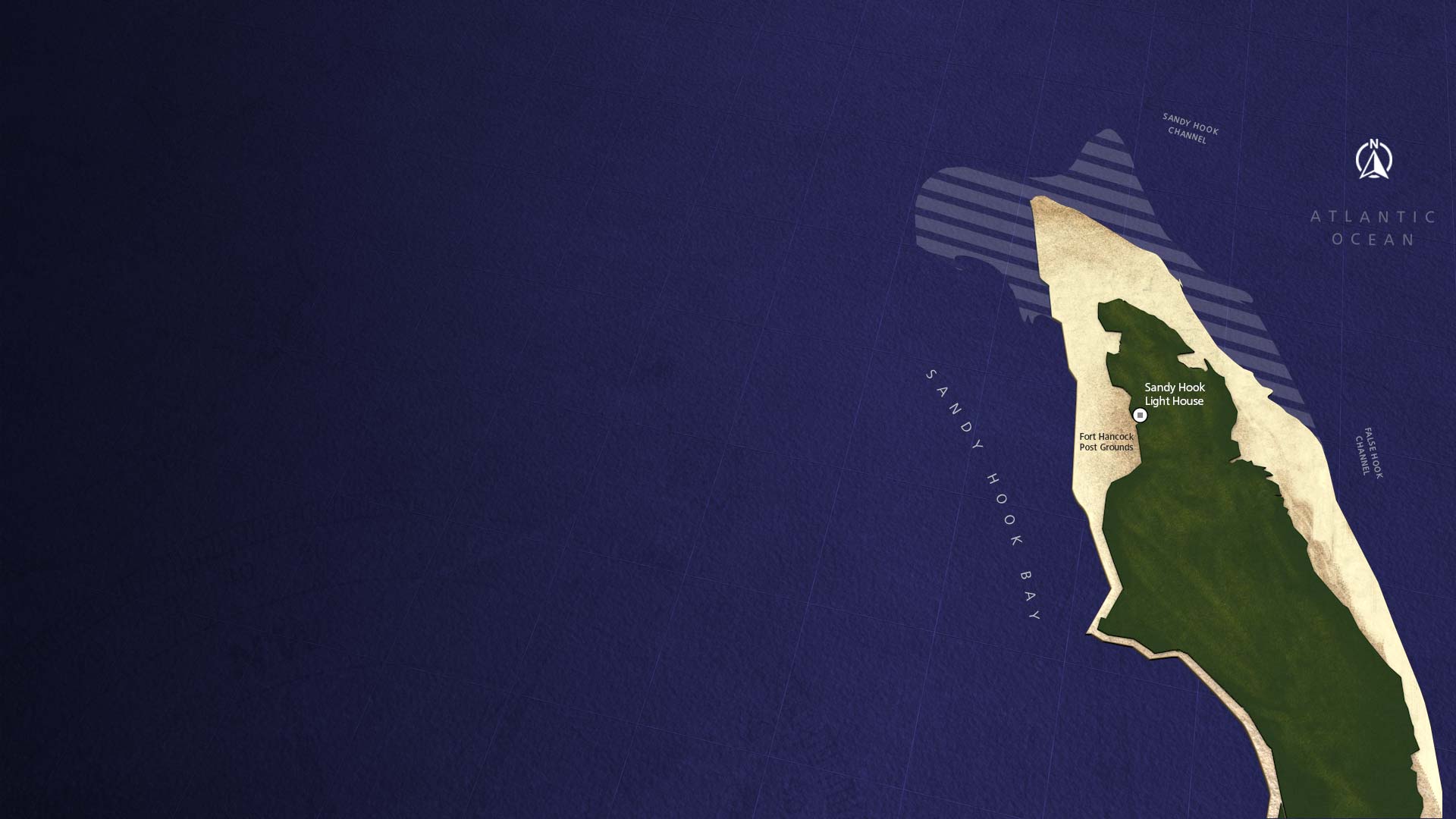
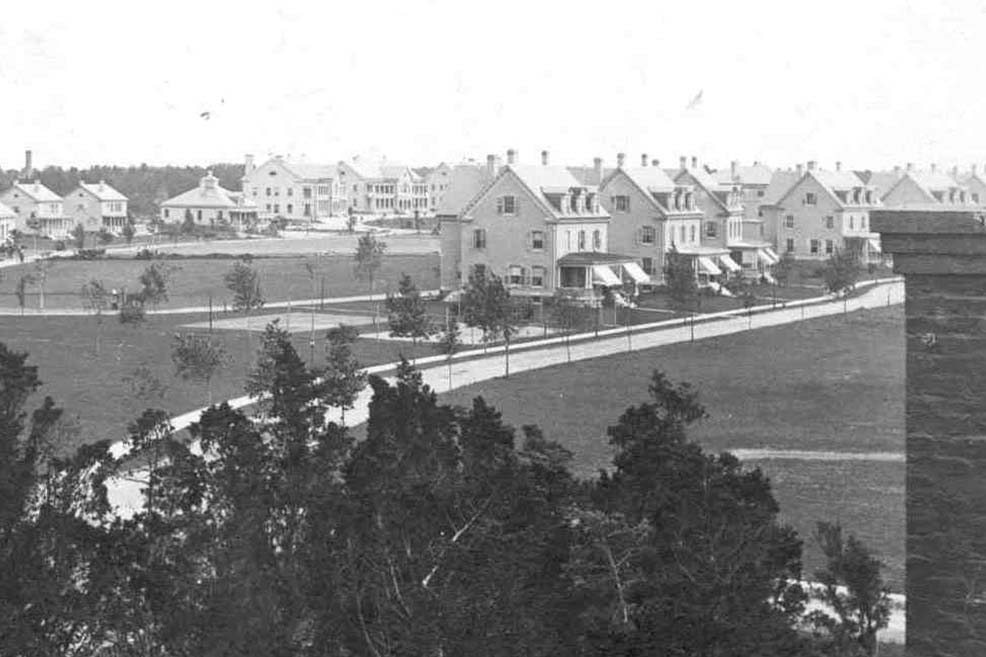
The grading of Fort Hancock's grounds and building construction started in 1897 but the harsh Sandy Hook winters, combined with labor and construction problems, extended construction until late 1899.
1900 - 1902
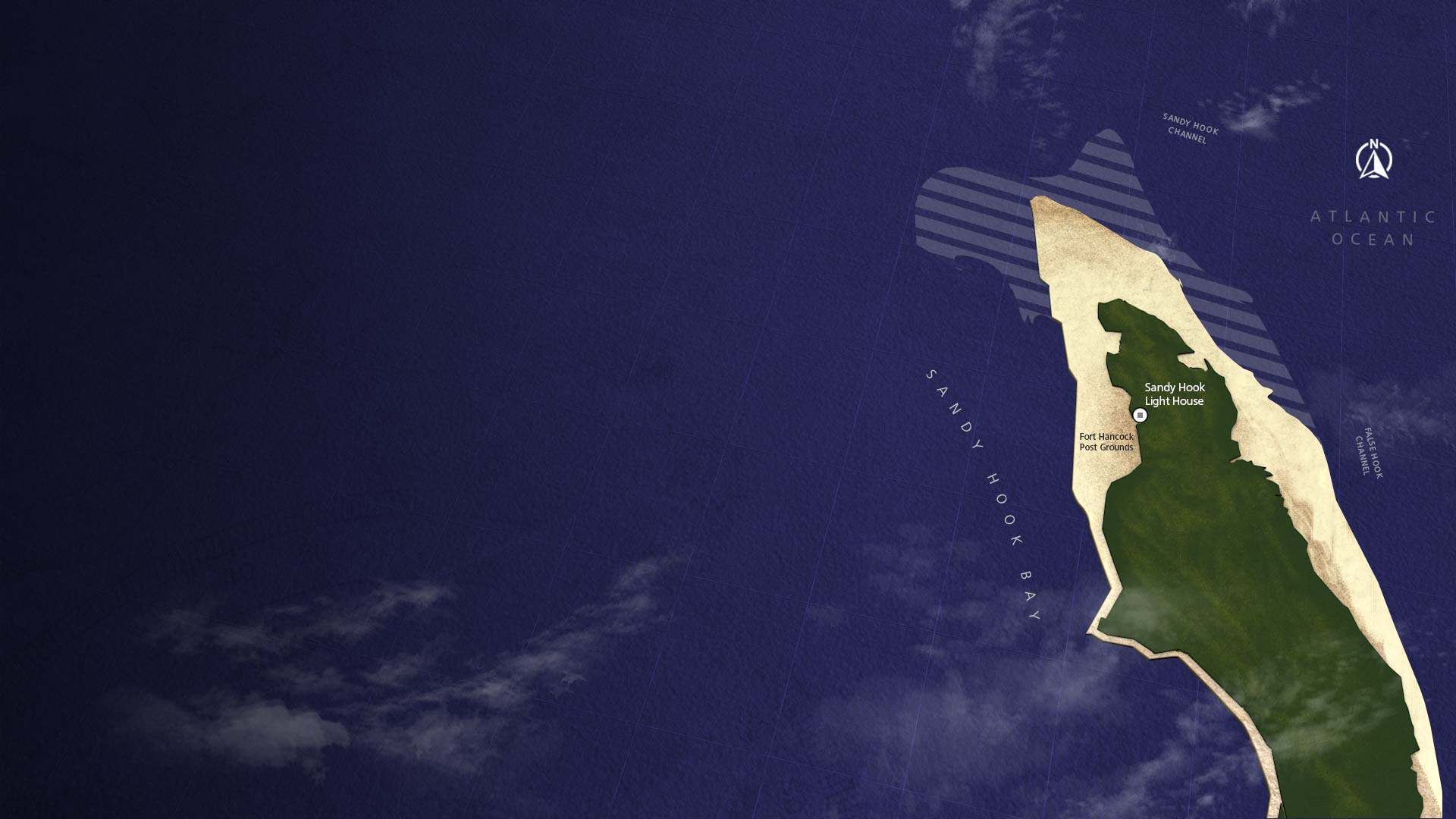
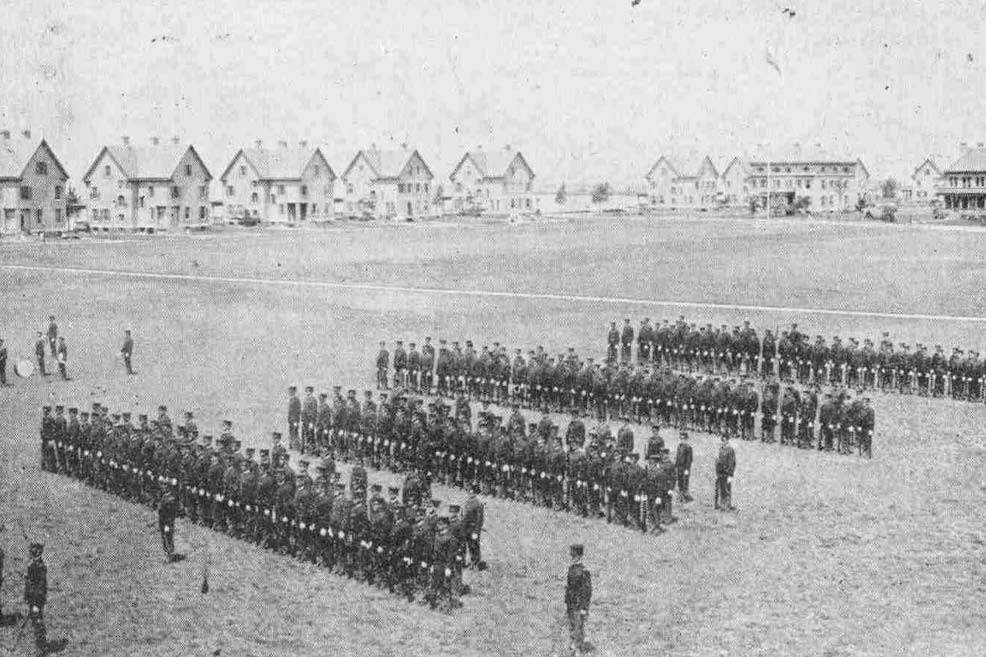
The former Fort Hancock Main Post grounds was to provide support for the soldiers staffing the Sandy Hook gun batteries. The original post, designed to garrison 400 soldiers, consisted of 37 structures built around a parade ground.
1907
December 17, 1907
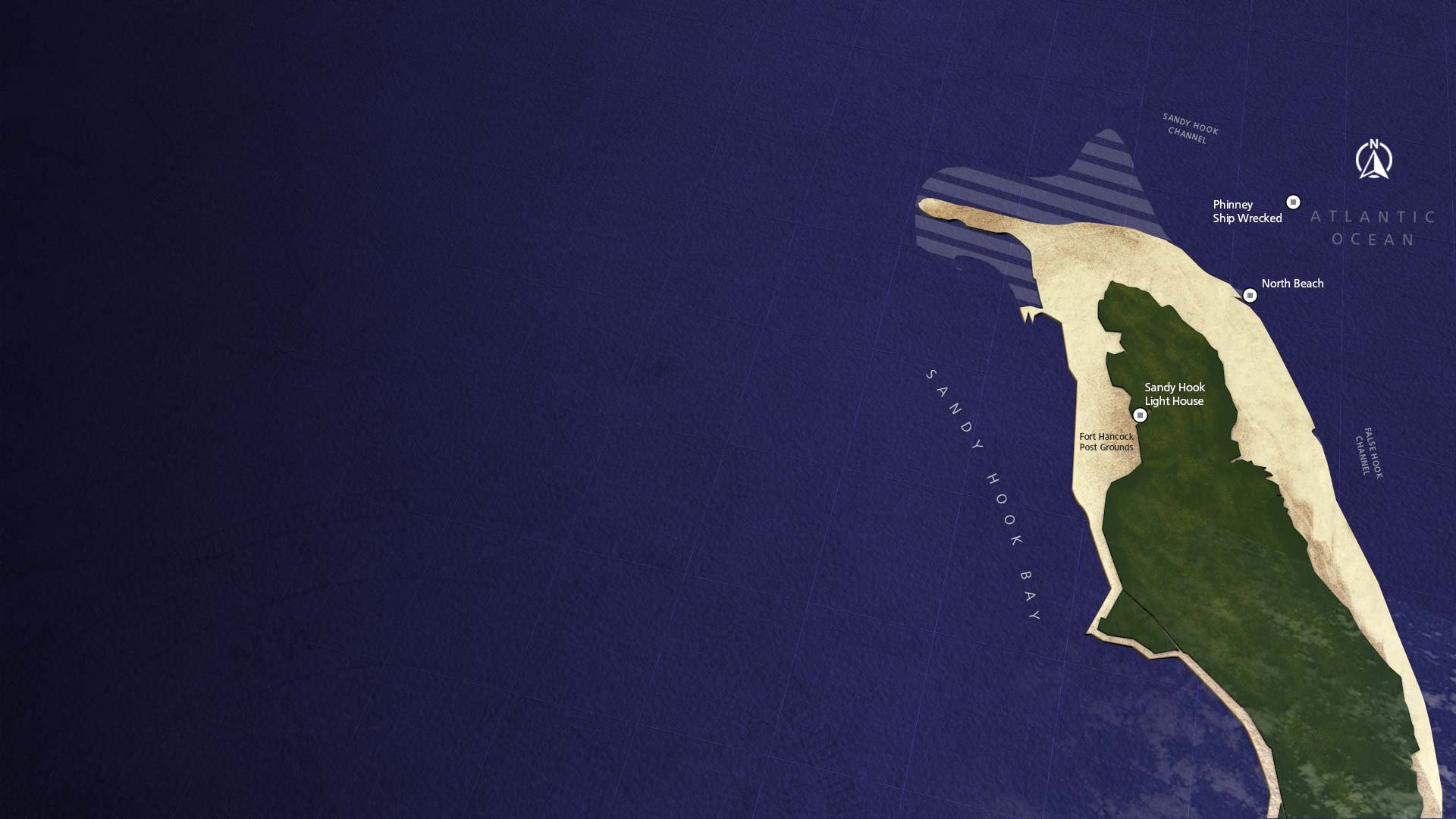
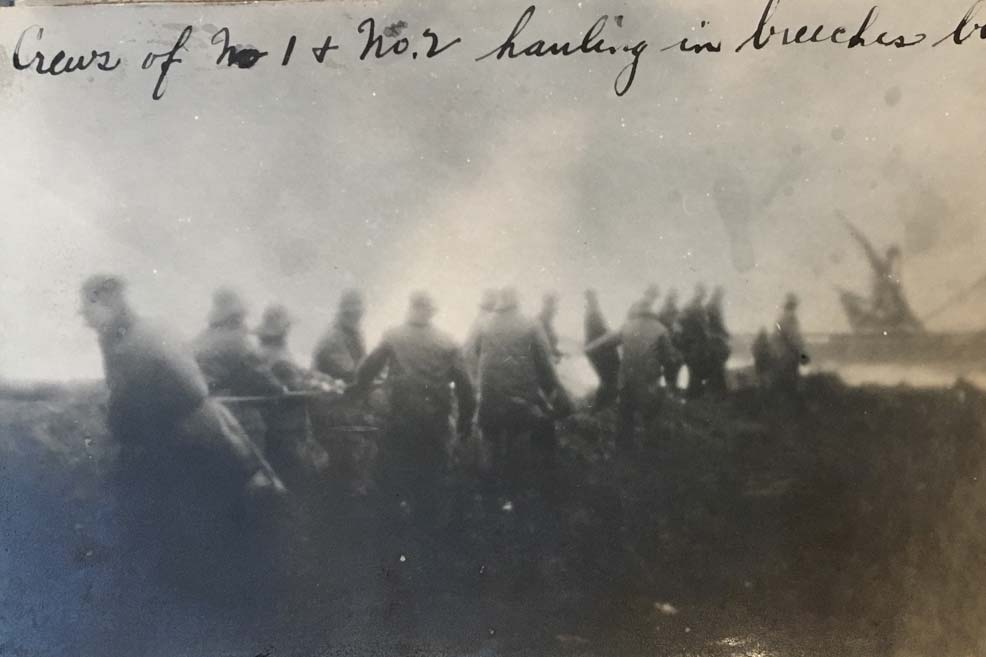
The sailing ship EDMUND J. PHINNEY wrecked during a fierce gale 300 yards off the Hook's North Beach area. Keeper Woolley's lifesaving crew pulled their beach apparatus cart two and one-half miles against raging winds and over flooded beaches to meet Keeper Patterson's lifesaving crew to save the seven sailors on the PHINNEY. Through freezing wind-swept waves, five seamen were laboriously hauled ashore in a breeches buoy. With the ship on the verge of breaking up and no time to spare, the PHINNEY's captain and first mate crammed themselves into the breeches buoy. They were just reaching the churning shore when the PHINNEY broke apart. The seven crewmen were wet, cold, and dazed, but still alive.
The seven surfmen and Captain Wooley from Spermaceti Cove Station No. 2, along with the seven surfmen and Captain Patterson from the Sandy Hook Life-Saving Station No. 1, at the northern end of the peninsula.
1944
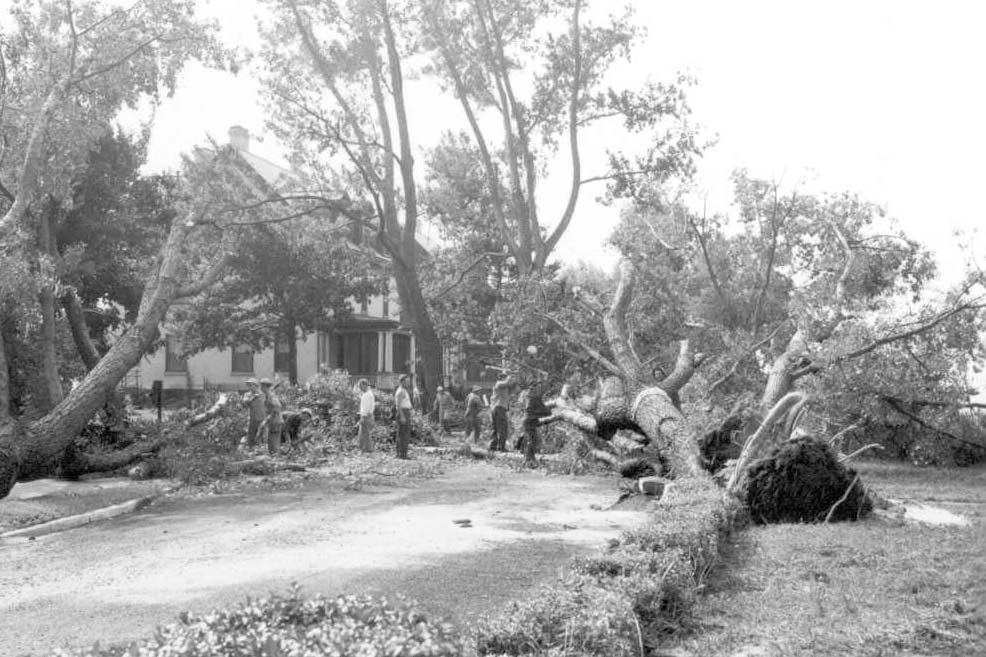
The storm that made landfall in September of 1944 brought tides along New Jersey's southern coast to more than 9 feet above sea level. Wind speeds were well over 100 mph in New Jersey, with some reports of 140 mph gusts. Sustained winds hovered around 74 to 95 mph, according to the National Weather Service. In total, the storm killed 390 people along the east coast. About 344 of those deaths were caused by shipwrecks at sea, including three military vessels, according to the National Weather Service's National Hurricane Center. At least eight people in New Jersey died. Property damage in New Jersey was estimated at about $25 million, which is about $337 million in 2015 dollars. Agricultural losses were estimated to be about $3.5 million.
1960
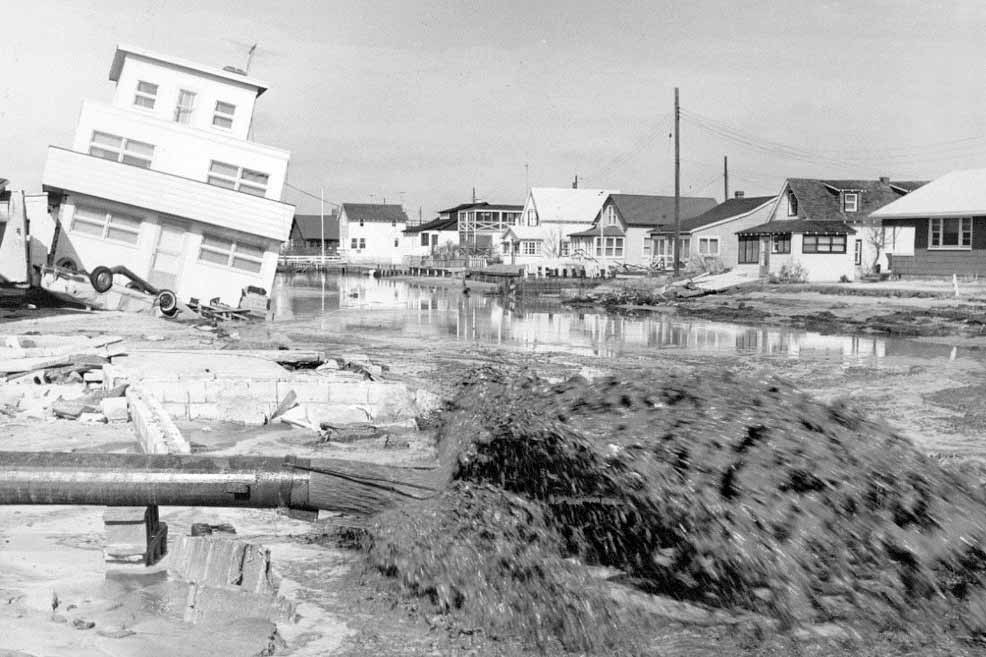
Hurricane Donna came without warning. It battered the Jersey coastline for
four days straight—from Monday, March 6, until Thursday, March 9. In total, 40 people
died, 10 of whom were from New Jersey. Amphibious "duck" vehicles, according to Press records
from 1962, rescued people stranded in their homes. 25ft waves smashed the
shore, tides were 6+ feet above normal and wind speeds were more than 80mph.
But it was the five consecutive high tides—caused by the spring equinox and a new moon—that made the damage worse.
Storm damage at Long Beach Island, N.J., 65 miles south of Sandy Hook.
1974
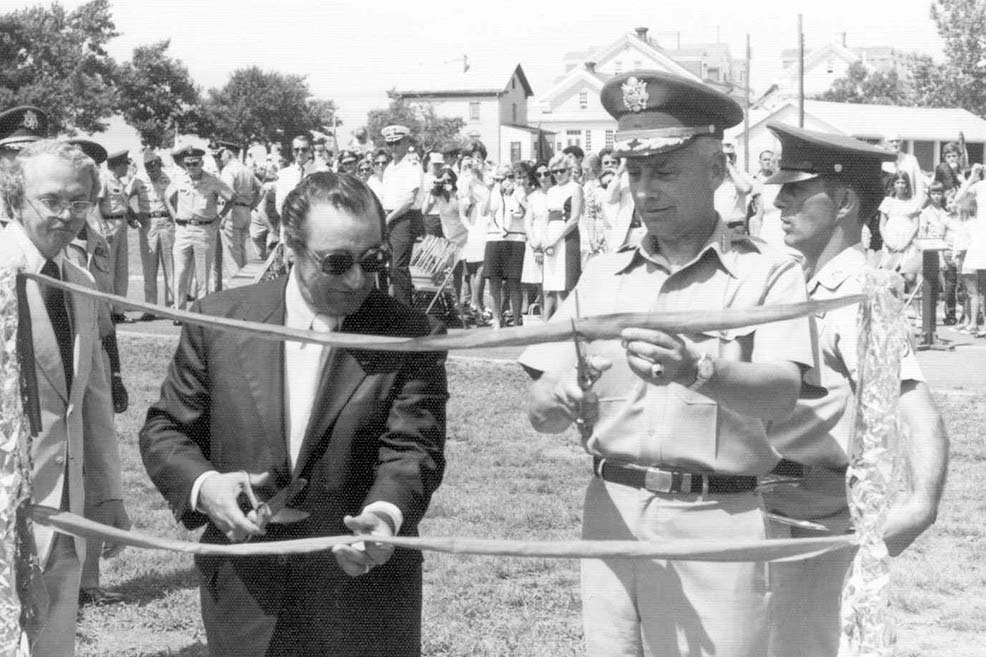
The US Army officially dedicated Guardian Park, Sandy Hook on August 15, 1974, to commemorate the Army's last air defense era 1950-1974 in the NY-NJ metro area. In the picture, the park's first General Superintendent Joseph Antosca and Lieutenant General Leonard Shoemaker, Commander of the US Army Air Defense Command (ARADCOM). The fort's deactivation occurred on December 31, 1974. As one era ended, another began. The fort was transferred to the National Park Service and administered as part of the Sandy Hook Unit of Gateway National Recreation Area. Today, the National Park Service oversees the use of many of the fort's buildings by a half dozen different educational, scientific, and environmental groups.
1994
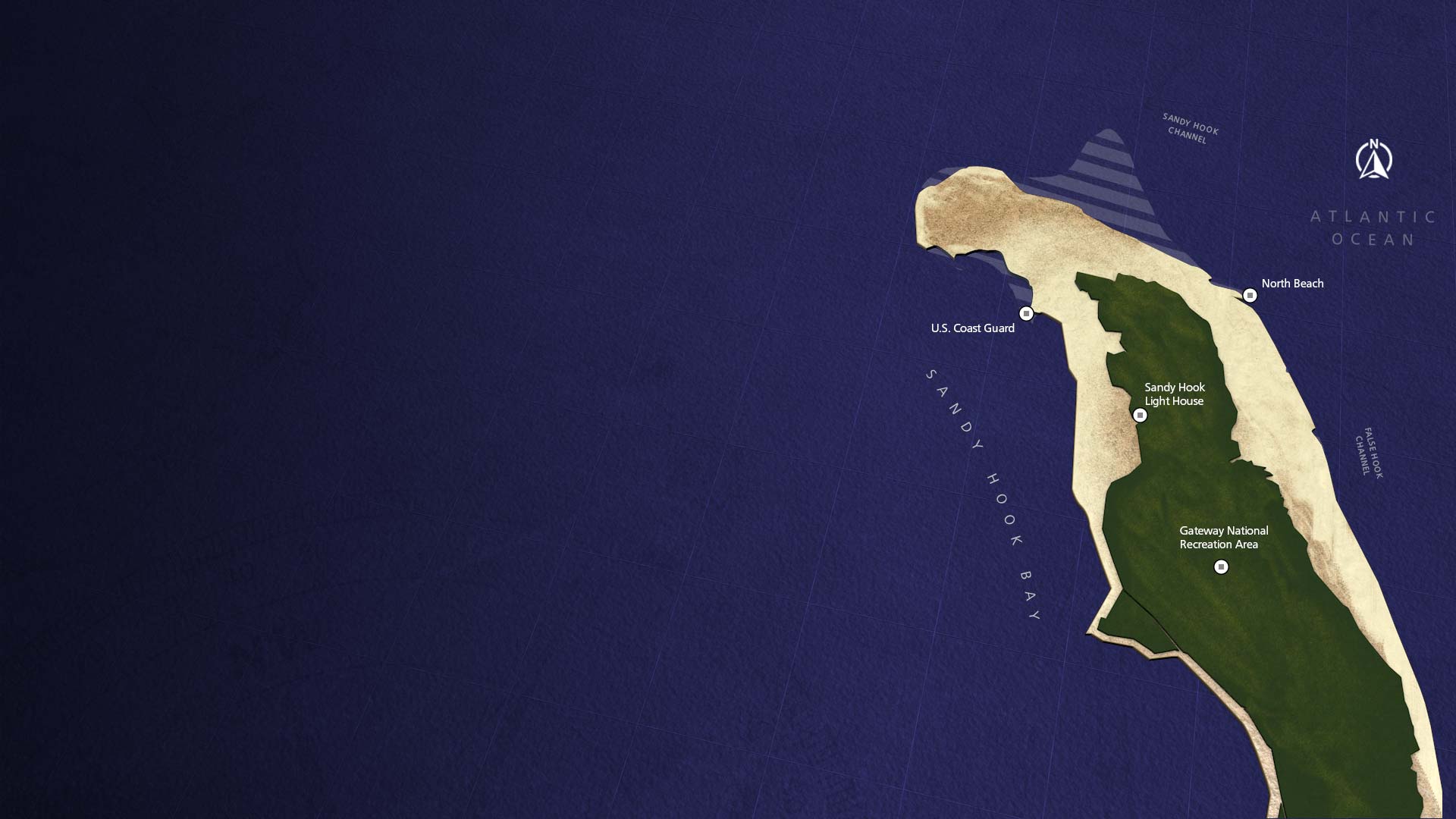
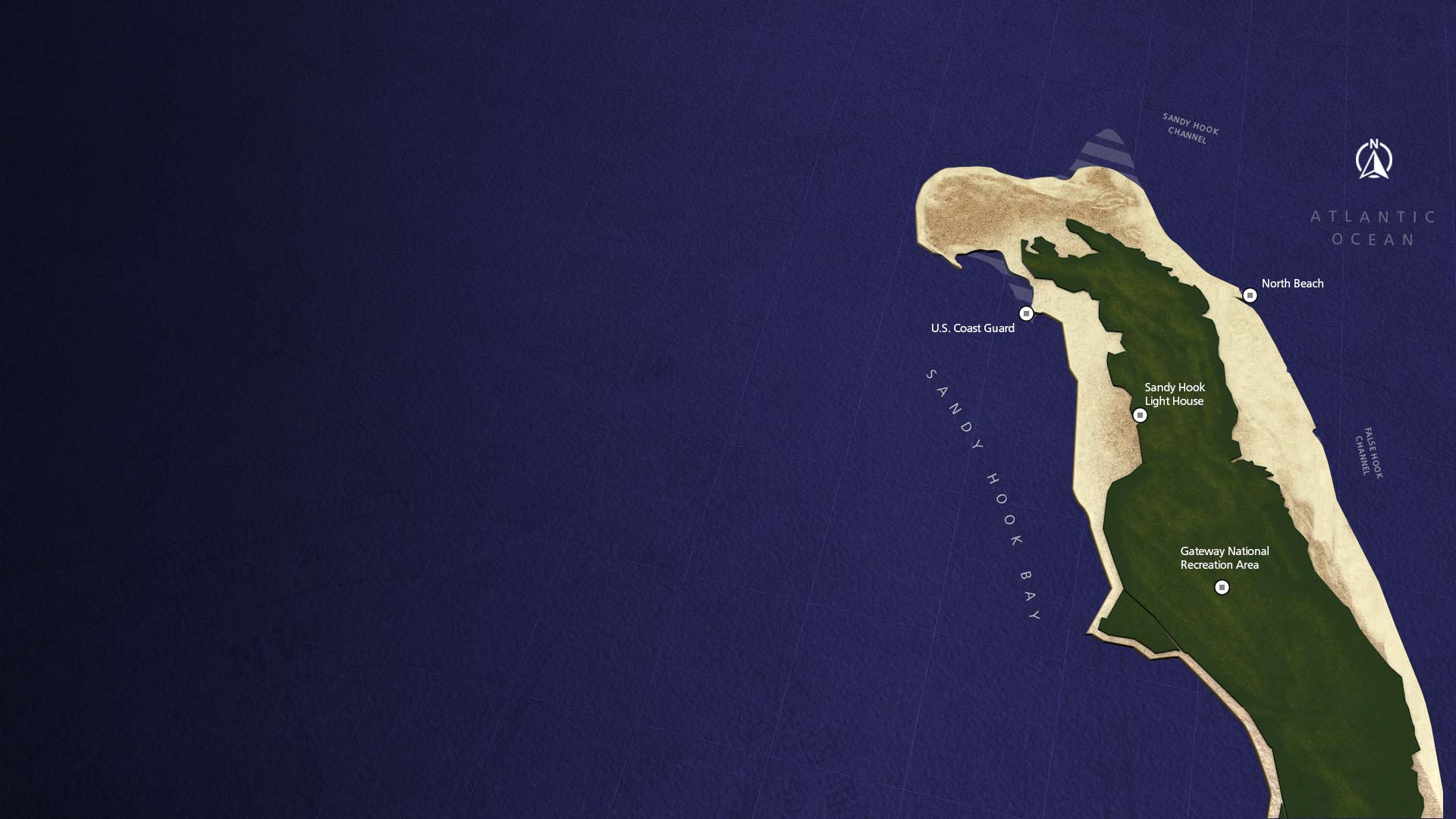
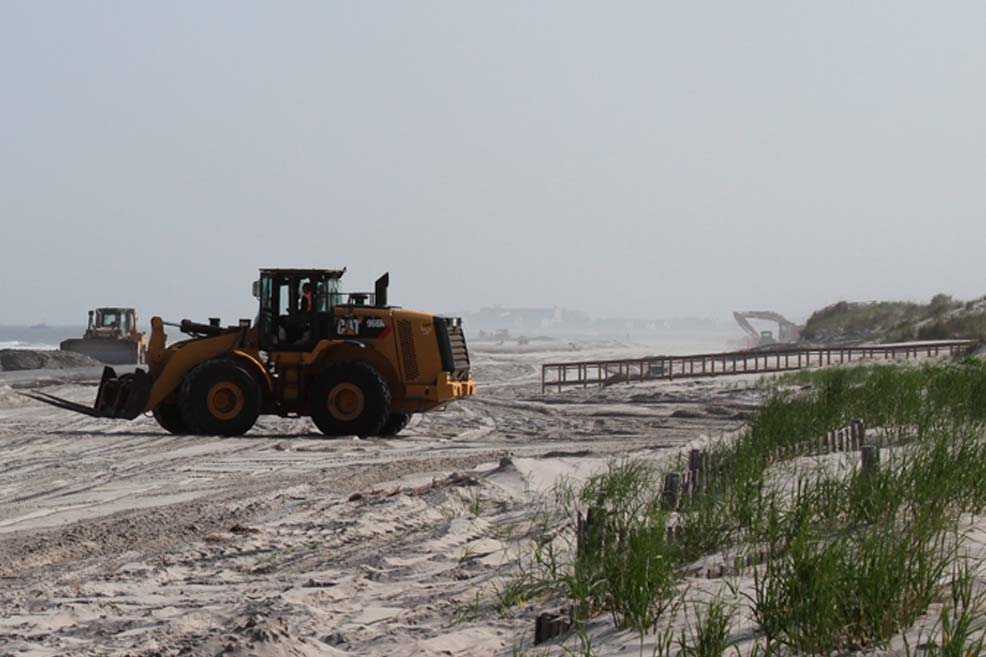
In 1994 a long-term sand replenishment project was begun to build up and maintain the eroded beaches south of Sandy Hook. A noticeable result of this project at Sandy Hook has been the build up and widening of the beaches at the Hook's south end along Beach Area B.
2012
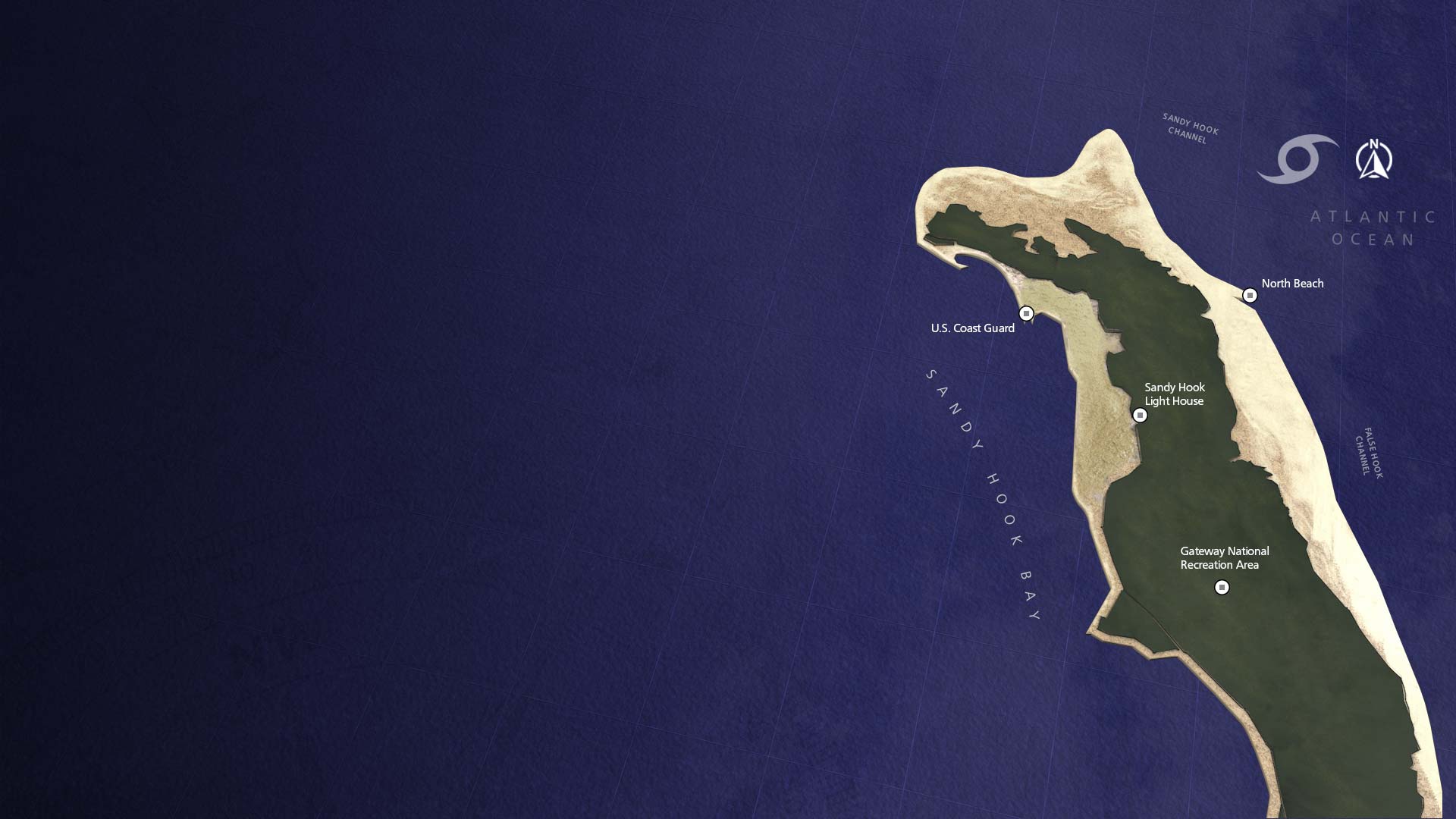
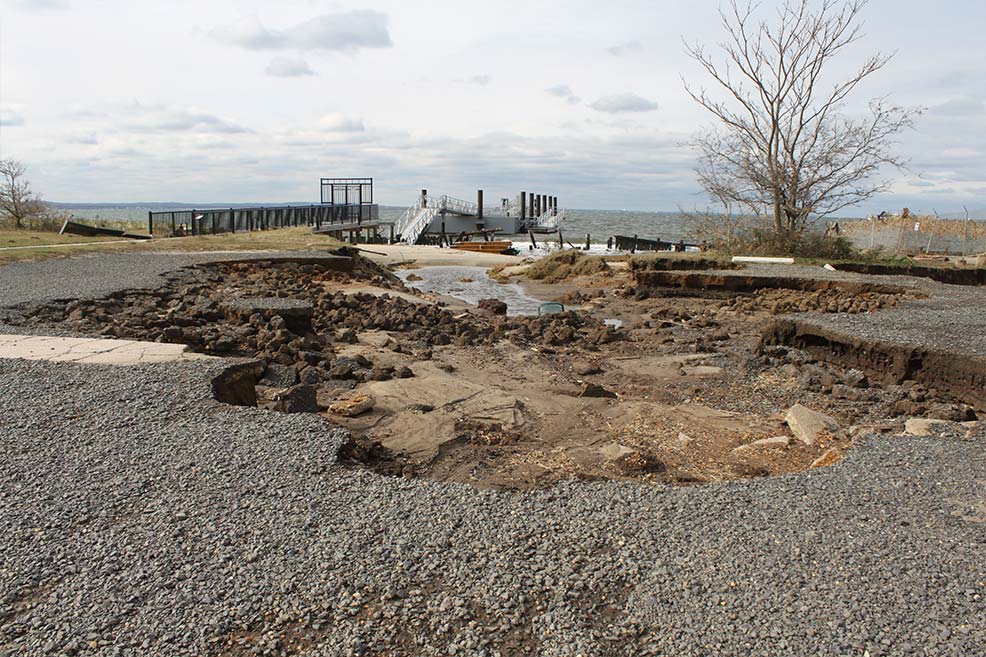
Hurricane Sandy made landfall on October 29, 2012. Hurricane Sandy hit Gateway hard, causing damage to all three units of the park and forcing the closure of the entire park. About 72 people in the U.S. died during Sandy, and more than half of those were in New Jersey. Maximum sustained winds were in the high 50s and maximum gusts were in the mid-70s. Sandy damage in New Jersey totalled about $29.5 billion, according to a September 2013 U.S. Department of Commerce Report on the storm's damage.
Today
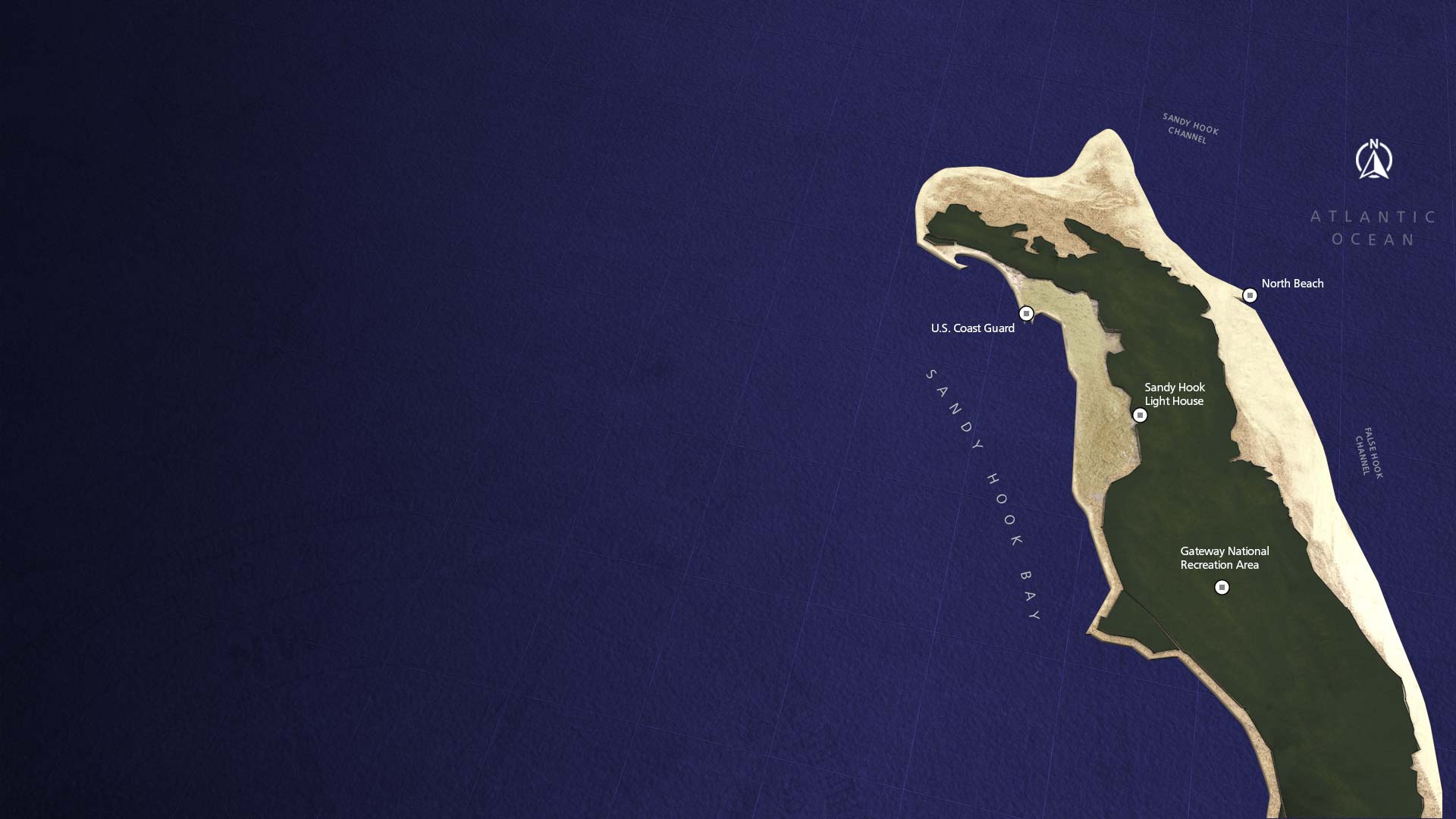
Climate change will continue to impact Sandy Hook over the next century and beyond. The effects of storms striking the peninsula will continue the migration of sand. Sea levels will continue to rise higher than they have been over the last 50 to 100 years, due to global warming. If future coastal management policies do not accommodate the natural inland migration of beaches and wetlands, these natural systems may disappear beneath the rising sea and the ecological, economic, and social benefits they provide will be lost.